In our previous article, we explained what omnichannel is and who should implement it. Today you’ll learn about unified commerce which is a strategy that over 75% of e-commerce is planning to implement!
Do your clients need this?
Based on PWC research shown in “Experience is Everything”:
- The shopping experience is an important decision-making factor for 73% of clients, right after the product price and quality. What’s more, over 42% of consumers are willing to pay more for a positive experience with the given company.
- 75% of clients prefer interacting with a human instead of a “robot”. However, 52% of clients would pay more for quicker and more effective interaction with the company in the shopping process.
The quality of the shopping experience can be improved by both omnichannel and unified commerce.
But the unified commerce model allows better and quicker interaction with the client thanks to integrating all sales channels with one platform.
Omnichannel vs. unified commerce – example
Imagine that a customer bought shoes online and it turned out that they chose the wrong size.
The next day they go to the local store and want to exchange the shoes. When it comes to omnichannel, this shouldn’t be a problem because the shoes have the same price both in the online and local stores.
However, there is a problem regarding the connection and updating of the database between the local and online stores.
Due to this, the store employee cannot accept the return and take a product that wasn’t sold in the actual store because he doesn’t have access to the e-commerce warehouse. In this case, the product quantities would be incorrect, etc.
This problem doesn’t exist in unified commerce. A store employee has access to the same system/platform in which the client shopped online. The store employee can make changes to the order and help the client.
This will for sure create a positive shopping experience for the customer and build brand loyalty. This is only one of the many benefits of unified commerce. You will learn more about them below.
What is unified commerce?
The unified commerce strategy is a higher level of managing sales. It is the next step to expanding multi-channel sales in omnichannel.
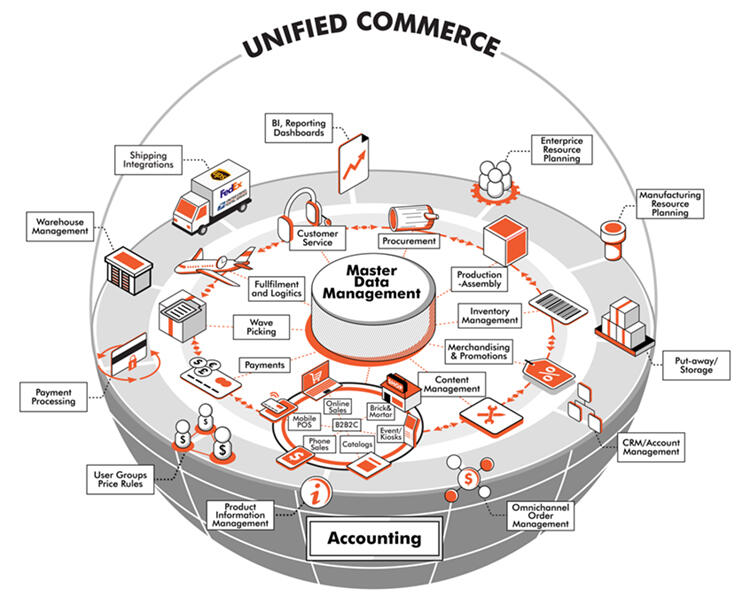
The basic task of this model is to ensure efficient communication between the client and the company through uniform management of specific sales channels. This enables all customer and order data to be operated and processed from a single platform. One platform for all sales channels of a given company.
In this case, the point is to allow customers to smoothly and easily change sales channels, depending on their current needs and preferences. This is possible thanks to the centralization and unification of communication management and interaction of customers with mobile applications, online stores, brick-and-mortar stores, or sales representatives.
What is the main strategy of unified commerce?
The goal of the unified commerce strategy is comprehensive synchronization between all sales and communication channels with customers, business partners, and potential customers.
Thanks to the implementation of one management platform in terms of the unified commerce strategy, customer experience is improved, guaranteeing consistency in contact with the company (both physical and online).
Unified commerce – the possibilities
Unified commerce, i.e. company management from a single platform, has a positive effect on many aspects. It enables, among others:
- all the benefits of implementing an omnichannel strategy,
- improving the level of the shopping experience and communication between the customer and the company,
- obtaining consistent data generated during the sales process, regardless of the channel,
- the application of a global loyalty program,
- access to information about stocks and the status of each order in real-time,
- verification of global KPIs (Key Performance Indicators).
For validation purposes regarding global KPIs, you can easily detect logistics and sales issues that regard all channels. This facilitates the management, planning, and development of the entire enterprise.
Omnichannel and unified commerce – the primary differences
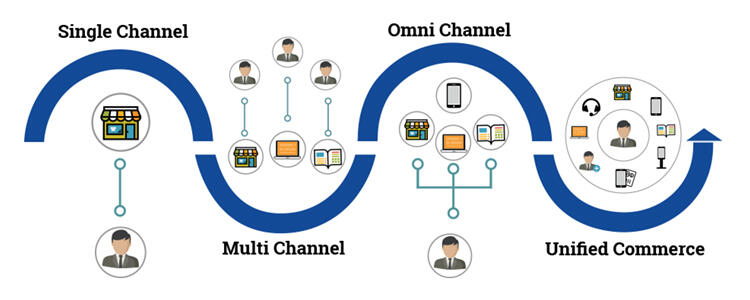
The main difference between unified commerce and omnichannel is the level of integration and cohesion.
Unified commerce
The unified commerce model combines all sales channels into one platform – to make information management as cohesive as possible.
Omnichannel
In this case, enterprises use various company integration tools that exchange data only to a limited extent or do not communicate with each other at all.
How to gain from a unified commerce strategy?
Thanks to implementing a unified commerce strategy we will avoid so-called expensive mistakes made due to using separate systems. One of the most commonly made mistakes is selling unavailable products (which seem to be in stock due to communication problems).
Adyen, a provider of end-to-end payment services, reported that customers who shop through more than one channel spend 40% more with the company.
Did you know that…
Sales in the omnichannel model and unified commerce are aimed toward customer satisfaction.
When it comes to the unified commerce strategy, it is mainly about centralizing management and guaranteeing the best shopping experience.
On the other hand, in the omnichannel model, the top priority is to increase the level of service and unify marketing activities through the synergy of all communication channels.
Summary
In business, it is not the biggest companies that win, but those that can adapt the fastest. The best example is Nokia, which disregarded the advent of smartphones.
In today’s world, changes happen even faster. During the pandemic, in many industries, we achieved progress predicted for 5-10 years in one year. E-commerce is certainly one of these industries.
Don’t wait for the competition to take your customers away. Analyze your business and consider implementing unified commerce. Thanks to this, you will provide your customers with what they expect – the best shopping experience, based on the use of multiple distribution channels in one place – on a dedicated platform.