

AI-Powered Competitor Monitoring — How Online Stores Analyze Prices, Promotions, and Market Trends
CTO
Step 1 of 2
Let's talk about what you need
Tell us about your idea or project. Focus on business and leave the technology with us.
Nie lubisz formularzy? Zadzwoń!
62 727 23 90
CTO
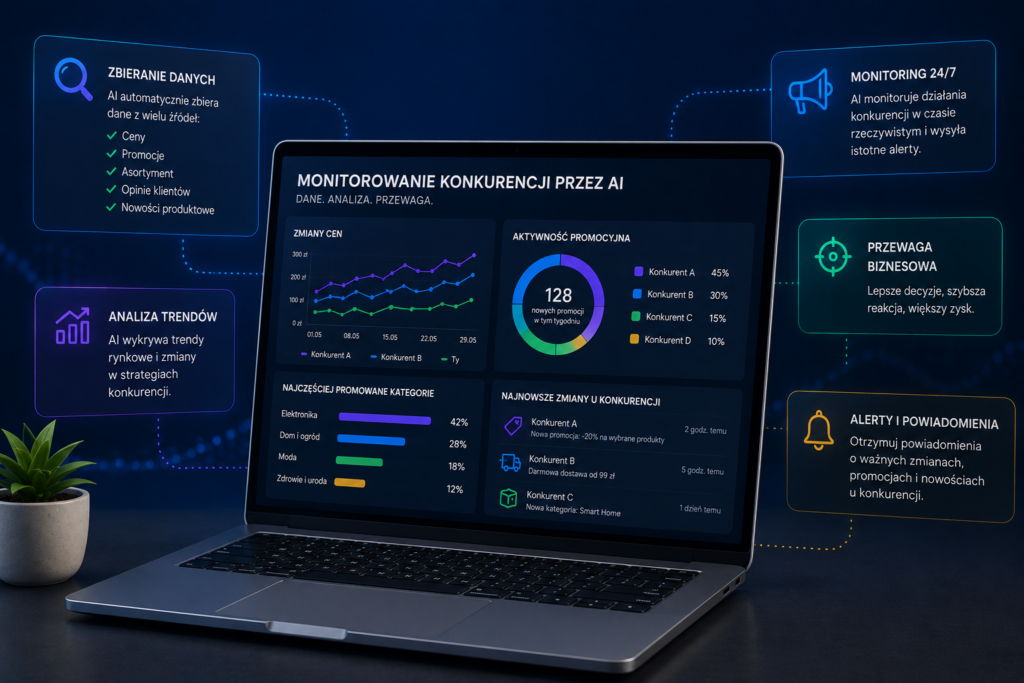
AI-powered competitor monitoring is becoming an increasingly important part of eCommerce growth strategies. That doesn’t mean artificial intelligence should completely replace people in market analysis. The real value comes when AI supports decision-making, automates repetitive tasks, and helps teams draw conclusions from data much faster.
In practice, AI-driven competitor monitoring can cover far more than just pricing. It may include tracking promotions, analyzing store features, monitoring customer reviews, evaluating marketing communication, and identifying broader market trends. Below, we’ll show how to approach this strategically — without wasting budget on automations that don’t deliver real business value.
AI can support competitor monitoring, but building an agent that independently scans every competitor product every single day isn’t always the smartest approach — especially for large online stores with hundreds of thousands of SKUs.
In these cases, the cost of automation can quickly outweigh the actual business value. That’s why, in many projects, it makes more sense to use AI as a support layer within the process rather than as a fully autonomous system expected to handle everything on its own.
AI can help with tasks such as:
To build these kinds of processes, companies often use workflow automation tools such as n8n, which make it possible to connect multiple data sources, APIs, and AI models into one cohesive workflow.
Read also: AI in eCommerce Market Analysis. AI w analizie rynku eCommerce.
One of the biggest mistakes in competitor analysis is focusing only on pricing. Prices are important, of course, but competing solely on price almost always leads to price wars and lower margins.
In eCommerce, a much stronger competitive advantage can be built through elements that genuinely improve the customer experience or deliver additional value.
It’s worth monitoring areas such as:
A practical example? Instead of trying to win with the lowest price, an online store can differentiate itself through better product descriptions, more detailed technical specifications, proprietary product testing, transparent ingredient or material information, or tools that help customers choose the right product.
These are the types of competitive advantages that can’t be easily copied with a simple price reduction.
| Area | How AI Can Be Used |
|---|---|
| Competitor Pricin | Helps analyze pricing changes, usually based on data collected from dedicated market monitoring tools. |
| Promotions | Detects promotion patterns, discount frequency, and how competitors communicate special offers. |
| Customer Reviews | Evaluates whether competitor promotions are perceived positively or create frustration and distrust among customers. |
| Marketing Communication | Analyzes the messaging, value propositions, and sales arguments used by competitors. |
| Market Response | Helps assess whether a specific promotional campaign is actually generating customer interest and engagement. |
AI can analyze not only competitor websites, but also the places where customers discuss and react to their actions. This is especially important because simply knowing that a competitor introduced a new feature doesn’t tell you whether it was actually successful.
A new product configurator, financing calculator, additional filtering option, or redesigned checkout may look impressive on the surface — but customer feedback is what ultimately reveals whether these changes improve conversions and the overall shopping experience.
AI can support the analysis of sources such as:
This makes it possible to identify not only what competitors have implemented, but also how customers perceive those changes.
For example, if a competitor introduces a new financing model, AI can help analyze whether customers understand how it works, see it as beneficial, or — on the contrary — perceive it as confusing or risky. This approach not only helps companies implement similar solutions more effectively, but more importantly, allows them to learn from competitors’ mistakes and simply execute the idea better.
W analizie konkurencji z wykorzystaniem AI obowiązuje bardzo prosta zasada: jeśli dostarczysz słabe dane, otrzymasz słabe wnioski.
Samo polecenie „wejdź na stronę konkurencji i powiedz, co robią lepiej” zwykle nie wystarczy. Model może wtedy wygenerować ogólne sugestie, które brzmią sensownie, ale nie są oparte na realnych danych biznesowych.
Dlatego przed wdrożeniem AI do monitorowania konkurencji trzeba odpowiedzieć na kilka pytań:
AI dobrze sprawdza się w podsumowywaniu, klasyfikowaniu i szukaniu wzorców, ale potrzebuje odpowiedniego kontekstu. Bez niego może wskazywać rozwiązania, które są poprawne ogólnie, ale nietrafione dla konkretnego sklepu, branży lub grupy klientów.
Competitor monitoring is only one side of the equation. The other is understanding the behavior of your own customers. The real value comes from combining these two perspectives.
AI has supported eCommerce analytics for years, even if many store owners haven’t traditionally described it as artificial intelligence. A good example is analytics platforms that use algorithms to detect anomalies, segment users, or analyze customer journeys.
Today, businesses can take this much further by combining data from multiple systems, including:
AI can help answer questions such as:
For example, one of our clients experienced a high cart abandonment rate during the second step of the checkout process. AI helped combine analytics data with session recordings and click heatmaps, making it possible to identify several potential causes of the issue — including a poorly visible button, unclear messaging, and an overly complicated form.
At the same time, it’s important not to treat AI as infallible. Its conclusions should always be verified, tested, and combined with the experience of the team — especially when using AI for tasks such as competitor monitoring and eCommerce optimization.

AI-powered competitor monitoring is not about having artificial intelligence blindly track every market change. The real value appears when AI supports a specific process: collecting data, organizing information, identifying patterns, and helping teams make faster, better-informed decisions.
The key benefits of using AI for competitor monitoring include:
At the same time, it’s important to remember that AI does not create a competitive advantage on its own. If it relies only on publicly available data, it will often push businesses toward the market average. Real differentiation happens when AI is combined with proprietary knowledge, high-quality data, team experience, and unique business context.
That’s when artificial intelligence stops being just an interesting technology trend and becomes a practical tool that genuinely supports the growth of an eCommerce business.

CTO
Od 12 lat doradzam firmom przy prowadzeniu projektów oraz rozwoju zespołów. Pomogę Ci zrozumieć technologię i programistów oraz zdefiniować Twoje potrzeby.
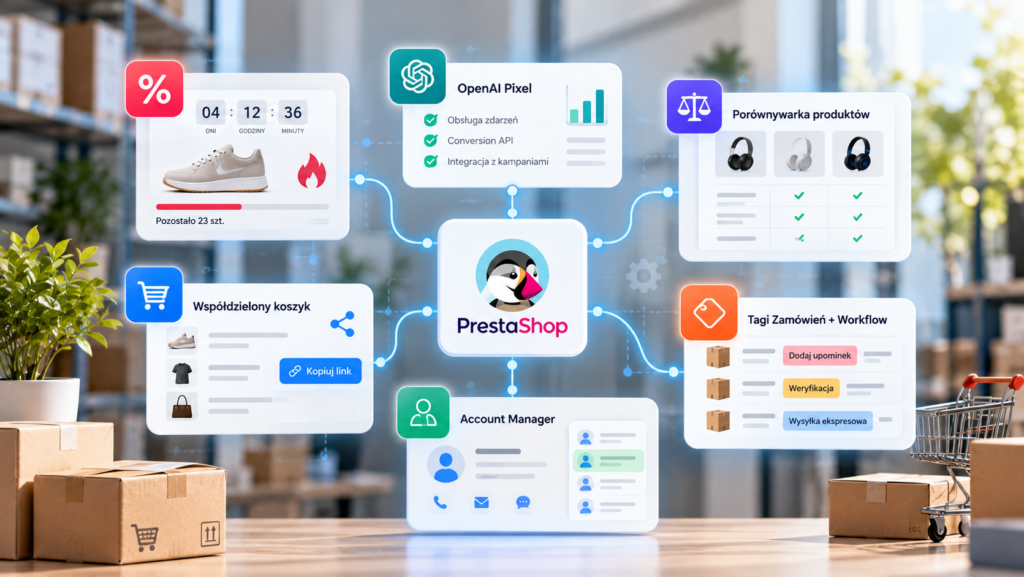
Custom PrestaShop modules by Tebim – solutions that extend your store's capabilities
How to Choose an eCommerce Platform for a Mid-Sized or Large Business: PrestaShop Compared
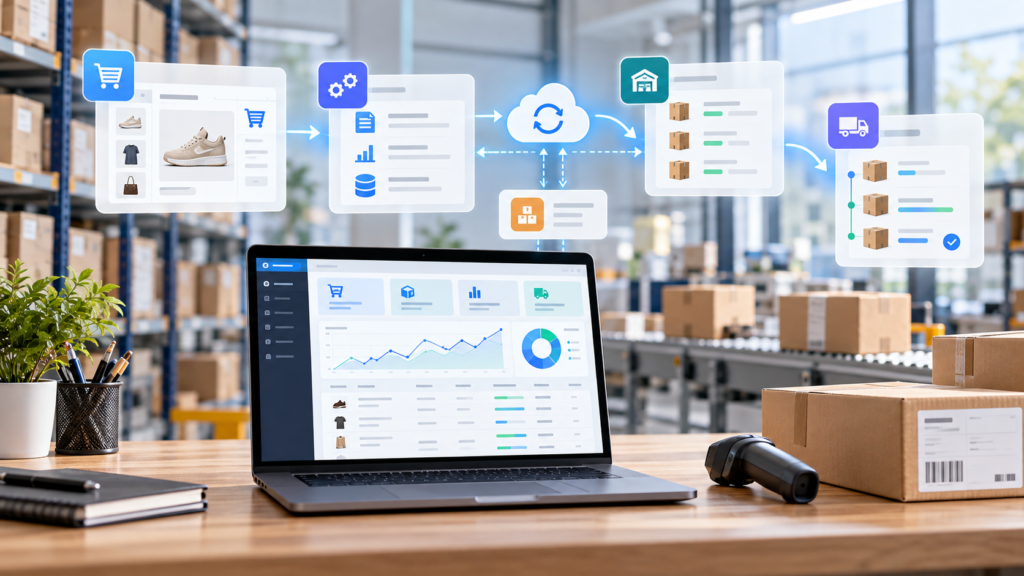
PrestaShop ERP and WMS Integrations – How to Automate Sales in a Large Online Store?
PrestaShop implementation pricing – why do agency quotes differ?

Logging in as a Customer in PrestaShop – What Is Impersonation and When Is It Worth Implementing?

WhatsApp in eCommerce – Promotions, Order Status Updates, and Customer Communication

How much does it cost to maintain and develop a PrestaShop store? Hidden costs after launch

n8n Automations in eCommerce – How to Improve Your Store?

Advanced eCommerce analytics – which data really shows your store’s profitability?

Building a B2B Store on PrestaShop – Key Features for Wholesale Sales

Custom eCommerce store development – when is it worth investing in a dedicated PrestaShop solution?

How to minimize eCommerce store downtime during a platform migration?

How Much Does It Cost to Switch eCommerce Platforms? A Cost Guide for Online Stores

Where to find inspiration for your online store’s visual design?

How to migrate an eCommerce store: step-by-step process, checklist, and best practices

How to prepare for an eCommerce platform migration

Client Needs Analysis in an Online Store Project

What is remarketing, and how do you implement it in an online store?

Store Migration: Payments, Integrations, and Logistics
AI-Powered Competitor Monitoring — How Online Stores Analyze Prices, Promotions, and Market Trends
Custom PrestaShop modules by Tebim – solutions that extend your store's capabilities
How to Choose an eCommerce Platform for a Mid-Sized or Large Business: PrestaShop Compared
PrestaShop ERP and WMS Integrations – How to Automate Sales in a Large Online Store?
PrestaShop implementation pricing – why do agency quotes differ?
Logging in as a Customer in PrestaShop – What Is Impersonation and When Is It Worth Implementing?
WhatsApp in eCommerce – Promotions, Order Status Updates, and Customer Communication
How much does it cost to maintain and develop a PrestaShop store? Hidden costs after launch
n8n Automations in eCommerce – How to Improve Your Store?
Advanced eCommerce analytics – which data really shows your store’s profitability?
Building a B2B Store on PrestaShop – Key Features for Wholesale Sales
How to minimize eCommerce store downtime during a platform migration?
How Much Does It Cost to Switch eCommerce Platforms? A Cost Guide for Online Stores
Where to find inspiration for your online store’s visual design?
How to migrate an eCommerce store: step-by-step process, checklist, and best practices
How to prepare for an eCommerce platform migration
What is remarketing, and how do you implement it in an online store?
Store Migration: Payments, Integrations, and Logistics

How to plan logistics and warehousing for an online store?

How to Reduce Order Fulfillment Costs in an Online Store: 10 Ways to Optimize eCommerce

Directive 2023/2673: The Return Button in eCommerce — How to Adapt Your Store and Avoid Penalties